
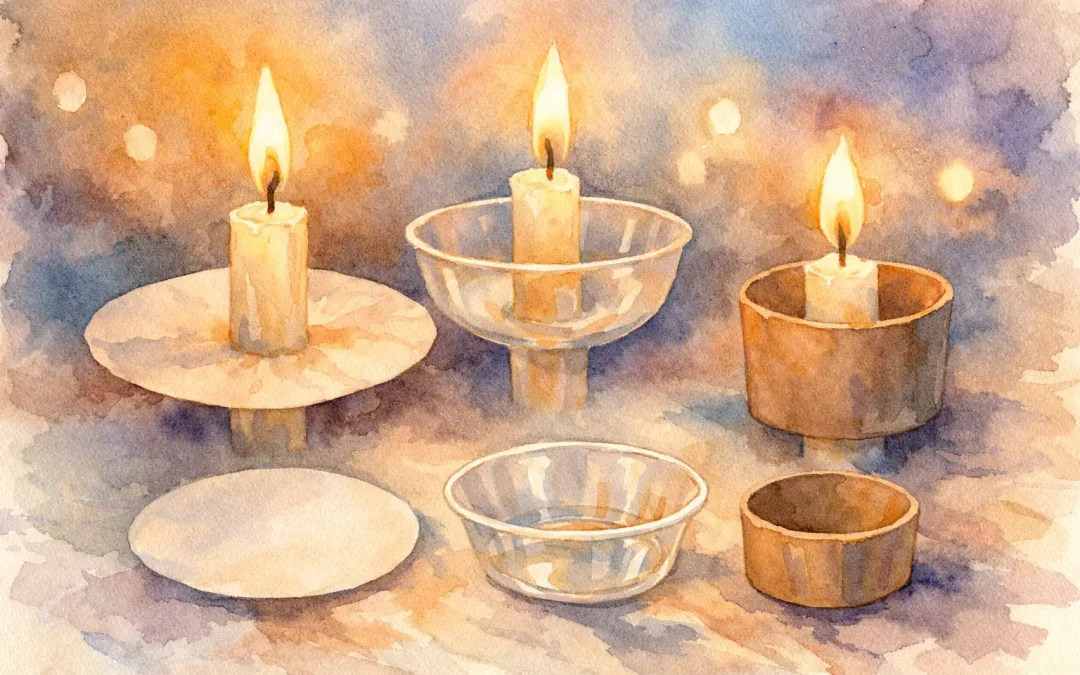
A candlelight service can turn disorderly very quickly when wax begins falling on hands, sleeves, pew cushions, and carpet. Candlelight service drip protectors are a simple accessory, but they solve a very practical problem for churches that need worship to remain reverent, safe, and easy to manage from the first candle lighting to the final hymn.
For many congregations, drip protectors are treated as a seasonal add-on, usually ordered shortly before Christmas Eve. In practice, they are part of the service plan. When the protector fits the candle properly and performs as expected, ushers have fewer issues to address, custodial cleanup is reduced, and worshipers can participate without worrying about hot wax.
Why candlelight service drip protectors matter
In a congregational setting, a candle is rarely handled the way it would be in a home devotional space. It is passed down crowded pews, tilted while being lit, carried by children and older adults, and often held for an extended portion of the service. That creates several points where wax can spill unexpectedly.
A drip protector creates a barrier between the burning candle and the person holding it. It also gives the hand a more stable place to rest, which can help limit tipping. This is especially useful in larger sanctuary settings where lighting begins at the chancel and moves gradually through the room. The longer a candle remains lit, the greater the chance that melted wax will travel downward.
There is also a presentation concern. Churches work hard to prepare for major services, especially Christmas Eve, watch services, memorial observances, and other candle-centered liturgies. Wax spots on upholstery or floors are not simply a maintenance issue. They add distraction and cleanup to an occasion that should be orderly and prayerful.
What a good drip protector needs to do
The basic function seems obvious, but not every protector performs equally well in actual worship use. A suitable drip protector should catch falling wax, sit securely beneath the candle, and remain comfortable for the average attendee to hold. If it shifts too easily, bends under heat, or fits loosely around the candle base, it may create as many problems as it prevents.
Material matters here. Paper protectors are common for large seasonal services because they are economical and easy to distribute. They work well when matched correctly with the candle size and when the service length is moderate. Plastic or heavier protectors may offer more structure, but some churches prefer a simpler disposable option for one-time or high-volume use.
Diameter is equally important. A protector that is too small may not catch enough wax. One that is too large can feel awkward in the hand and may not stack or distribute efficiently before the service. Churches ordering in quantity should think less about generic compatibility and more about the exact candle size being used.
Matching candlelight service drip protectors to the candle
This is where many ordering problems begin. Buyers may select candles first and then add protectors without checking fit. Or they may reorder protectors from a prior year after changing candle diameter or style. Even a small mismatch can cause trouble on the night of the service.
The protector opening needs to fit the candle base securely enough to stay in place during passing and lighting. A loose opening can allow the shield to slide. A very tight opening can slow down volunteer preparation and may damage the candle if forced.
Length and burn time also affect the decision. A shorter candle used in a brief service may require only basic wax protection. A longer candle intended for extended singing, readings, or a gradual candle-sharing format may benefit from a protector with better coverage. The right choice depends on the service order, not only on the candle itself.
Churches that use pre-bobeches or followers with other candle types should be careful not to assume those accessories serve the same purpose. Candlelight service drip protectors are intended for handheld congregational use. Their design priorities are different from accessories used at the altar or in fixed holders.
Planning for congregation size and service flow
A church serving 75 people has different needs than one preparing for 1,500 worshipers across multiple Christmas Eve services. In smaller settings, staff or volunteers may have enough time to inspect each candle before distribution. In larger services, efficiency becomes part of product selection.
If volunteers need to insert hundreds of candles into protectors in a short window, ease of assembly matters. If candles will be handed out at entry points, stackability and organization matter. If children will be included, hand comfort and wax containment matter even more.
This is why product decisions for seasonal worship should be made with the service flow in mind. Think about where candles will be stored, who will assemble them, when they will be distributed, how they will be lit, and how they will be collected or discarded afterward. The protector is a small item, but it touches every part of that sequence.
Common purchasing mistakes
One frequent mistake is ordering too close to the service date. Candlelight service supplies are often purchased in a rush during a busy season, and that leaves little room to verify sizing or adjust quantities. It is better to confirm candle dimensions and protector compatibility early, especially if the church holds more than one candlelight event during Advent or Christmas.
Another mistake is underestimating quantity needs. Churches sometimes count only expected attendance and forget about clergy, musicians, acolytes, greeters, and extra candles for late arrivals. Ordering too tightly can create confusion at the door or leave volunteers improvising with unmatched supplies.
A third issue is treating all congregations the same. A protector that works well for an adult evening service may not be the best choice for a family service with many children. Likewise, a sanctuary with closely spaced pews may present different handling challenges than a fellowship hall or outdoor setting.
Storage, setup, and post-service cleanup
Good purchasing also reduces labor after delivery. Protectors should be kept clean, dry, and organized with the matching candle stock. Mixing sizes in storage leads to preventable errors during setup. If your church uses more than one candle type throughout the year, clear labeling is worth the effort.
On the day of the service, setup teams should assemble a sample batch first rather than opening every package immediately. That gives staff time to confirm fit and handling before volunteers prepare the full quantity. It is a simple checkpoint that can prevent a larger problem.
After the service, cleanup needs are usually lower when the protector has done its job well. That means fewer wax spots on floors, less scraping from pews, and less concern about wax on coats or hymnals. For churches managing multiple holiday services in the same week, that reduction in cleanup is not minor. It saves time and helps the worship space remain ready for the next gathering.
When it makes sense to standardize
Many churches change candlelight supplies from year to year based on price alone. While budget matters, standardizing a dependable candle and protector combination often makes purchasing easier over time. It simplifies reordering, volunteer training, and service preparation.
This is especially helpful for churches with altar guild teams, seasonal volunteers, or office staff who rotate responsibilities. A consistent setup means fewer last-minute questions about fit, quantity, or assembly. It also allows institutional knowledge to carry forward, which is valuable when holiday planning is handled by different people each year.
For that reason, many churches prefer to keep their candlelight service supplies within a church-focused source such as Emkay Candle Co., where product selection reflects congregational use rather than general retail candle sales. The benefit is not only convenience. It is better alignment with worship requirements, sizing expectations, and repeat ordering needs.
A practical standard for safer worship
The best candlelight service drip protectors are not the ones that draw attention to themselves. They are the ones that quietly do their job, support safe handling, and help the service proceed without distraction. For churches, that is the real standard – a product that respects the setting, fits the candle correctly, and makes worship preparation more dependable.
Before your next candlelight service, take a few minutes to review the full process from ordering through cleanup. A small adjustment in protector size, quantity, or compatibility can make the evening easier for staff, volunteers, and the congregation alike.